
People also ask:
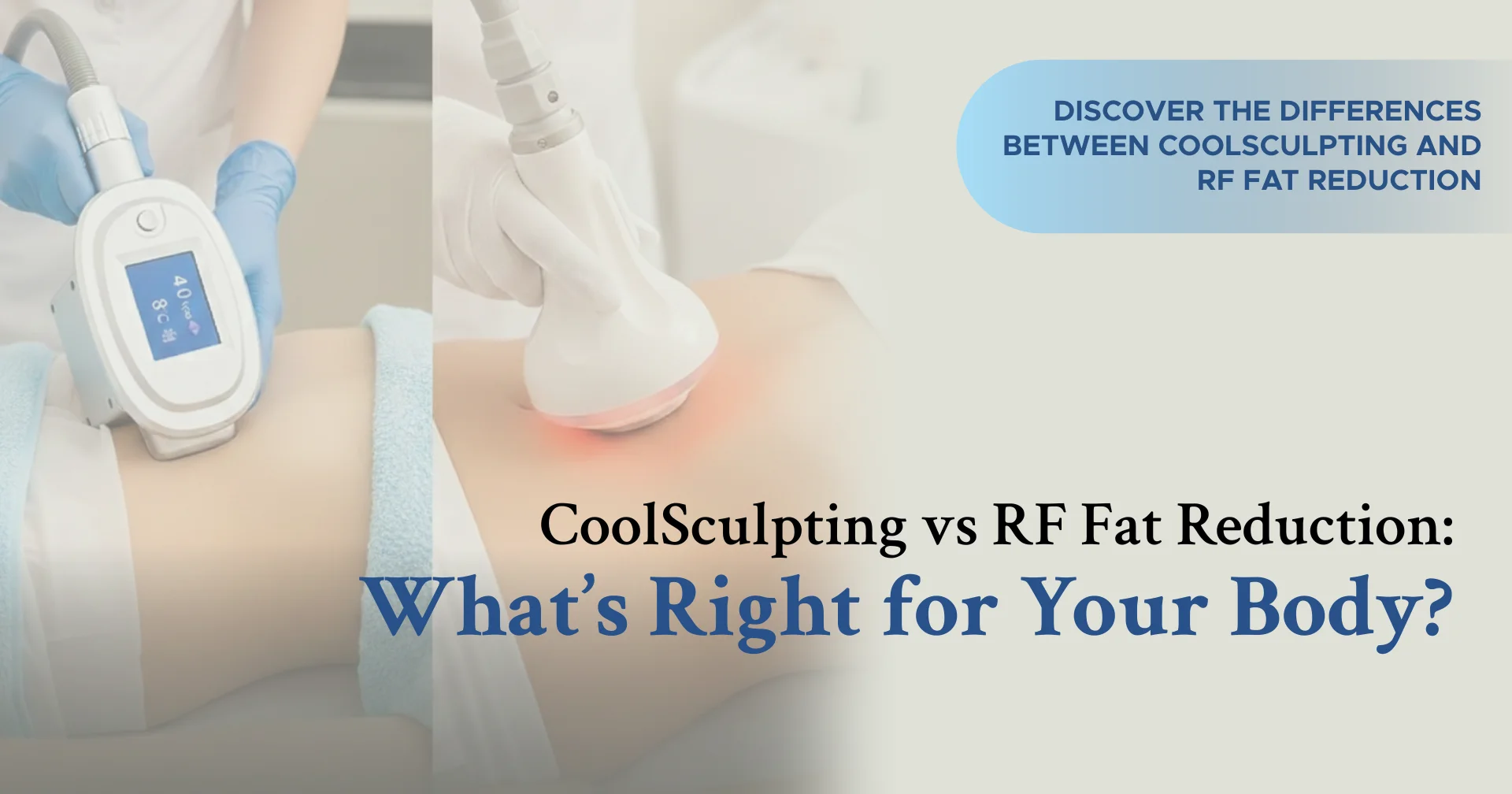
CoolSculpting uses cold to destroy fat cells, while RF (radiofrequency) uses heat to shrink fat cells and tighten skin. Both are non-surgical but work differently.
RF treatments are better for mild to moderate skin laxity since they stimulate collagen and tighten skin, unlike CoolSculpting which only targets fat.
Yes, CoolSculpting destroys and eliminates some fat cells permanently, but remaining fat cells can still expand with weight gain.
RF treatments are typically delivered in a series of 3–6 sessions for best results, often with maintenance sessions recommended every few months.
When The Body Resists Effort
Many people arrive at this question quietly. They have tried consistency. They have honored movement. And still, certain areas feel unchanged. This is not a failure. It is physiology. Non surgical fat reduction exists to support the body where effort alone does not reach. Understanding the difference between cooling based and heat based treatments brings clarity, and clarity allows choice without pressure.
Understanding Non-Surgical Fat Reduction
Non-surgical fat reduction targets localized fat deposits without incisions or anesthesia. These treatments do not replace weight loss or surgery. They refine areas that feel resistant.
Two major categories dominate this space:
- Cryolipolysis, commonly known as fat freezing
- Radiofrequency and heat-based fat reduction
Each works through a different biological pathway. Each carries its own strengths.
What Is CoolSculpting And How Does It Work
CoolSculpting is based on cryolipolysis, a process where controlled cooling targets fat cells without harming surrounding tissue, as fat cells are more sensitive to cold than skin or muscle. During treatment, an applicator gently suctions tissue between cooling panels, causing the fat cells to crystallize and enter apoptosis. Over time, the body clears these cells through natural metabolic processes. This process is deliberate and slow, with results unfolding over weeks rather than days.
Key Characteristics Of CoolSculpting:
- Targets discrete fat pockets
- Does not tighten skin
- Typically requires one session per area
- Results appear over two to three months
CoolSculpting is best suited for patients with good skin elasticity who want reduction rather than contour refinement.
What Are RF And Heat-Based Fat Reduction Treatments
RF and heat-based technologies use controlled thermal energy to raise the temperature of fat tissue. This heat disrupts fat cell integrity while also stimulating collagen production in the skin. Rather than destroying fat cells outright, these treatments shrink fat cells and enhance metabolic activity.
The added benefit is gentle skin tightening. Heat-based treatments tend to feel gradual and soothing, and many patients describe them as restorative rather than aggressive.
Key Characteristics Of RF Fat Reduction:
- Improves skin firmness and texture
- Gradual fat reduction
- Usually delivered in a series
- Minimal downtime
These treatments are ideal for patients who want refinement with skin quality improvement.
Comparing CoolSculpting And RF Fat Reduction
| CoolSculpting | RF And Heat Based Fat Reduction |
| Uses cold based energy | Uses heat based energy |
| Destroys targeted fat cells | Shrinks fat cells gradually |
| Does not tighten skin | Encourages skin tightening |
| Sensation can feel cold to intense | Sensation feels warm and tolerable |
| Often completed in one session | Requires a series of sessions |
| Best for isolated fat pockets | Best for mild fat with skin laxity |
This comparison highlights an important truth. These technologies are not interchangeable. They serve different bodies and different intentions.
Sensation And Experience During Treatment
CoolSculpting sessions often begin with intense cold and suction, a sensation that typically softens into numbness as the area adapts. After treatment, the area is manually massaged, which some people find uncomfortable. In contrast, RF treatments feel warm and progressive, with no suction or freezing, and many patients find themselves relaxed during the session. Experience matters, because the body remembers how it is treated.
Downtime And Recovery Considerations
Both approaches are non surgical and allow a return to daily activities. CoolSculpting may cause temporary swelling, bruising, numbness, or tenderness that can last from days to weeks. RF treatments typically have minimal aftereffects, with mild redness or warmth that resolves quickly. For those with busy schedules, this difference often influences choice.
Results And Longevity
CoolSculpting permanently removes a portion of treated fat cells, though remaining fat cells can still expand with weight gain. RF treatments reduce fat volume gradually while improving skin structure, and maintenance sessions may be recommended to help sustain results. Neither treatment replaces healthy habits. They amplify them.
Who Is A Better Candidate For CoolSculpting
CoolSculpting may be appropriate if you:
- Have firm skin with good elasticity
- Want to reduce a specific bulge
- Prefer fewer treatment sessions
- Are comfortable with cold-based procedures
It works best when skin quality is already strong.
Who Benefits More From RF And Heat-Based Treatments
RF may be a better fit if you:
- Notice mild to moderate skin laxity
- Want contour smoothing rather than volume reduction
- Prefer gradual changes
- Value comfort during treatment
It is often chosen for postpartum bodies or aging skin.
Safety And Medical Oversight
Both cryolipolysis and radiofrequency fat reduction are FDA cleared when used appropriately, but safety is never defined by technology alone. It is shaped by patient selection, anatomical understanding, and clinical judgment. While most treatments are well tolerated, rare but serious side effects have been reported with cryolipolysis, including paradoxical fat hyperplasia. These outcomes highlight why evaluation matters more than assumptions.
RF-based fat reduction carries a lower overall risk profile when administered properly, particularly because it does not rely on extreme temperature shifts. Still, even lower-risk treatments require expertise to ensure energy delivery respects surrounding tissues. Medical oversight ensures decisions are informed by physiology rather than trends, keeping patient safety at the center of care.
Safety Overview Of Cryolipolysis And RF Fat Reduction
| Aspect | Clinical Considerations |
|---|---|
| FDA Status | Both cryolipolysis and RF fat reduction are FDA cleared when used appropriately. |
| How The Treatment Works | Cryolipolysis uses controlled cooling to target fat cells, while RF uses thermal energy to heat fat and support collagen response. |
| Recovery Time | Most patients experience little to no downtime with either approach. |
| Common Temporary Effects | Mild redness, swelling, numbness, or warmth that typically resolves on its own. |
| Rare But Serious Risks | Paradoxical fat hyperplasia has been reported with cryolipolysis, while RF carries a very low risk profile when properly administered. |
| Role Of Medical Oversight | Proper evaluation, patient selection, and clinical guidance are essential for safety and outcomes. |
Can Treatments Be Combined Thoughtfully
Yes, in carefully selected cases, cryolipolysis and RF can be combined in a strategic sequence. Cryolipolysis may first reduce localized fat volume, while RF is introduced later to refine skin texture and support tightening as tissue remodels. This order respects healing timelines and allows each modality to function without competing demands on the tissue.
Combination plans are never automatic. Timing, spacing, and tissue response matter, and what works well for one body may not be appropriate for another. Thoughtful planning acknowledges that there is no universal protocol, only individualized pathways guided by intention.
Why Personalization Matters More Than Technology
The most important question is not which technology is better. The more meaningful question is which approach listens to your body. Fat distribution, skin elasticity, metabolic health, and daily habits all influence how treatment outcomes unfold. Without personalization, even advanced devices can fall short.
At iCare Medical Spa, consultations focus on tissue quality, lifestyle considerations, and long-term goals rather than trend-driven solutions. The goal is alignment, not novelty, and care that responds to the body rather than trying to override it.
Integrating Fat Reduction With Other Services
For patients seeking more comprehensive contouring, fat reduction may be integrated with complementary services when appropriate. These additions are explored only when they enhance balance and support recovery, not simply because they are available.
Services that may thoughtfully complement fat reduction include:
- Body Contouring Services – Customized plans that consider fat distribution, symmetry, and recovery pacing.
- Emsculpt Neo – Muscle-strengthening support that may be explored when tone and functional strength are part of the goal.
- Morpheus8 – RF microneedling that can support skin tightening and texture refinement in selected cases.
Each option is introduced intentionally, never by default, and only when it supports the overall treatment strategy.
Emotional Considerations In Body Treatments
Body concerns often carry personal history, including stress, transitions, or long-standing self-perception. For this reason, change should feel supportive rather than corrective. A respectful approach acknowledges that emotional comfort influences how the body responds to treatment.
Choosing a modality that honors pacing, sensation tolerance, and readiness can gently shift outcomes over time. Feeling safe and supported during treatment matters as much as visible change, and often shapes satisfaction long after sessions are complete.
Setting Realistic Expectations
Neither cryolipolysis nor RF fat reduction is designed to produce dramatic weight loss. These treatments support contour refinement rather than transformation, with results that develop gradually.
Patients often notice improved clothing fit, smoother transitions between treated areas, and renewed confidence. These subtle changes accumulate quietly, reinforcing that sustainable results do not need to be dramatic to be meaningful.
CoolSculpting Vs RF Fat Reduction At iCare Medical Spa
If you are deciding between CoolSculpting and RF fat reduction, the most valuable first step is conversation. A consultation allows space to evaluate body composition, skin quality, and comfort preferences without urgency or pressure.
Together, we focus on understanding what your body needs rather than pushing toward a predefined solution. The goal is clarity, not persuasion, and care that feels grounded and respectful.
A Grounded Invitation
Your body does not need correction. It needs support, patience, and informed care. Non surgical fat reduction works best when it honors where you are rather than where you feel pressured to be.
A consultation offers space to explore options with clarity and intention. When you are ready, that conversation is always welcome.
References
American Society for Dermatologic Surgery. Cryolipolysis overview. APA format. https://www.asds.net
U.S. Food and Drug Administration. Cryolipolysis safety communication. APA format. https://www.fda.gov
Goldfarb R, et al. Radiofrequency body contouring mechanisms. Journal of Cosmetic Dermatology. APA format.
Kinney B, et al. Clinical outcomes of noninvasive fat reduction. Aesthetic Surgery Journal. APA format.
Sadick N. Noninvasive body contouring technologies. Dermatologic Clinics. APA format.